
Est. 1966 · Kingsport
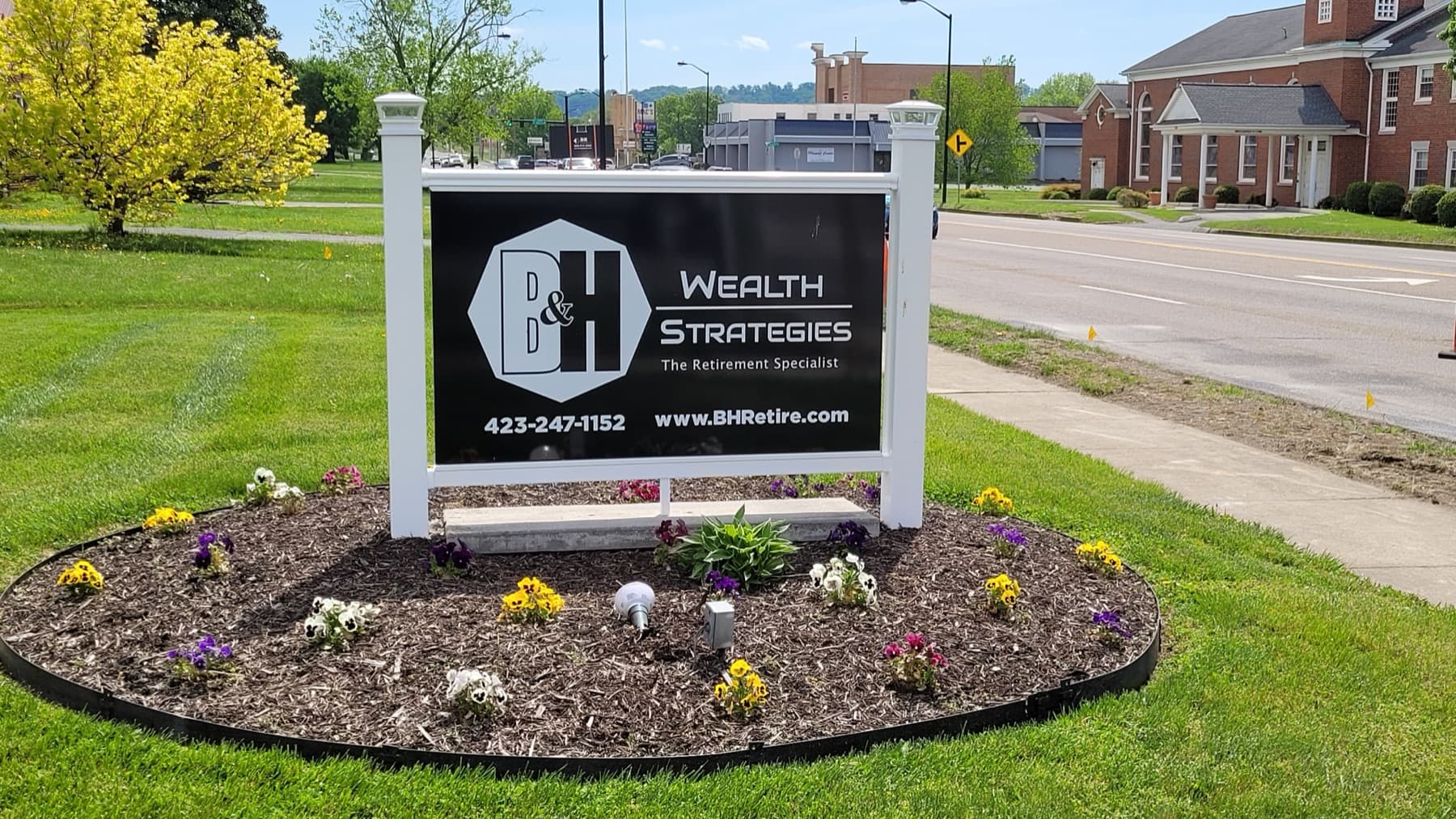
We have been on this corner for sixty years.
Center Street and Lamont, across from Fair Acres. Thousands of cars stop at that light every day and have for decades.
The people, by name
The people you’d be calling.
You already know the other kind of relationship. A number that routes you to whoever is free. A rep you finally got comfortable with, gone by the next statement. A voice that has to pull up your file to remember who you are. That is not this. Here, you’re a name, not an account number. Sixty years on the same corner buys one thing above all: the same faces, still here.
A transaction ends when the paperwork is signed. A relationship does not. We measure the work by whether a family is genuinely better off, clearer and steadier and better prepared, because they sat across the table from us.
- Jake BinghamChief Operating Officer
- Diane Violante-MaciasDirector of First Impressions
Jeff Bingham
President
I have been in this business more than thirty five years. I am the president of B&H Wealth Strategies, second generation of a family firm founded in 1966, now in its third. The awards are there if you want to count them, most trusted advisor, the seminars, the radio shows, the newspaper column. I knew my craft. I was good at it.
At sixty three, after losing my sight, my mother, and my brother, I found my faith. Before that I would have told you I had discipline, strength, endurance. I did have them. They were not enough to hold me up when it got hard.
What I found at the bottom was Jesus Christ, and with him, real meaning and real purpose.
I will tell you plainly that the work I do today, in a business built on numbers and charts I can no longer see, is better work than I did when I could see.
My clients get the best of me every day.
Keep the faith. God bless America.
Sherry Bingham
Chief Financial Officer
I came to B&H in 2001 as assistant to Bob Bingham, the firm’s co-founder and my father-in-law. Today I am the Chief Financial Officer, and I have worked alongside Jeff for most of that time.
I run the business side of the firm. Accounting, payroll, accounts payable and receivable, and human resources. I also do a good deal of the prep and the check work behind what goes out our door, because the details are where a client is either served well or served poorly.
I am an East Tennessee State University graduate. Before B&H I worked for an insurance company and managed the office at a preschool.
I grew up in a split household, a Catholic father and a Presbyterian mother, and neither of them ever gave an inch. What I took from it was that faith is lived rather than argued.
My husband Bob Bingham Jr. is the head track coach at Dobyns-Bennett High School. We have two sons, both University of Tennessee graduates. Rhett and his wife Laura are in Atlanta with our two grandchildren. Laura is a University of Georgia grad, so we have learned to let red and orange live together. Devin and his wife Kinga are in Minneapolis, where he teaches special education and she works in the school system. They are the parents of Sid, our grand dog.
Away from the office I am usually on the water or behind a camera enjoying photography.
Jennifer Holt
Director of Operations
I take care of the business processing and service work at B&H. When a decision gets made in a meeting, I’m the one who sees it carried through.
I came to B&H in 2024, and I believe God put me here. I’m married to Jason, and we have five grown daughters and nine grandchildren. My grandbabies are the stars of my crown.
I’m originally from Chucky, Tennessee, and I spend my commute listening to old gospel hymns and in prayer. Outside of work I ride horses, read the news, and shop online, more than I should admit.
It is my prayer, every day, to be of service to God, my family and my B&H family, including our awesome clients, who have blessed me so much!
Matt Bingham
Media and Marketing Director
I am the media and marketing director at B&H. Everything you see and hear from this firm, the videos, the podcast, the newsletters, the posts, comes across my desk. My job is to make sure what goes out sounds like us.
I came to this by an unusual road. I spent seventeen years at Hawkins, Bingham and Miller, the law firm right across the street, shooting depositions and witness testimony, editing, doing research, building presentations for mediation and trial, and running their IT. I still do freelance legal videography.
I grew up in Kingsport and have lived here most of my life. I have a history degree from Austin Peay State University in Clarksville, with a minor in communications.
I am also a singer-songwriter. I wrote the jingle for this firm, which is a strange thing to get to do for the family business. You can hear it on the Four Seasons Podcast.
Catherine Rhinehart
Events & Hospitality Coordinator
I serve as coordinator for Client Events and Hospitality for B&H Special Events. These events begin to come to life many months before they actually happen. Choosing the perfect venue is the first concern, followed with coordinating many details such as menu, décor, handouts, AV equipment, entertainment, photographers, order of events, and items for favors, bringing it all together for an amazing evening for our guests.
I spent 21 years working for B&H, both as Jeff’s Assistant and as Marketing Coordinator, retiring in 2019. After six years in retirement, I returned to run these events in 2025, starting with the March Madness Client Event. After 21 years, the B&H Community had become my family by loving and caring for me through all my life’s events, so returning was almost like I had never left.
The B&H Clients are also like my family, who shared and encouraged me through my personal ups and downs that shaped my story for so many years. Many prayers were lifted up for me and my family. Getting to be back and see these clients at our special events is a real treat for me.
I am a Kingsport native, graduating from Dobyns-Bennett High School and Tusculum University. My husband, Charles, and I share 4 children and 7 grandchildren who bring us lots of joy and keep us very busy. We enjoy trips to Hilton Head and water gardening in our Koi pond.
Leslie Garretson
Chief of Staff
I protect Jeff’s day so his time goes where it matters most, which is the client. Everything else comes to me first.
I also know what we are working on this week, what is waiting on somebody, and what is done. When something leaves this office, I am the one who makes sure it gets where it needs to go.
I am also an end-of-life doula. I founded Legacy Pathways, where I sit with families through the last part of a life. Love. Heal. Protect. That is what I am there to do, and it is the same thing I am doing here.
People ask how that fits with a wealth management firm. What a family leaves behind is not only money, and the people who do this well are the ones willing to talk about the hard part instead of around it.
Around here they call me Yeoman.
We have added people, and clients notice. It is fair to ask what that means for you.
This firm has to be strong enough to outlive the people currently running it. A fragile business does not serve a widow in twenty years or a grandchild in forty, and those are real obligations we have already taken on. Growth is what pays for the depth to keep them.
There was a stretch not long ago when this firm had every reason to fold, and our clients had every reason to leave. They stayed.
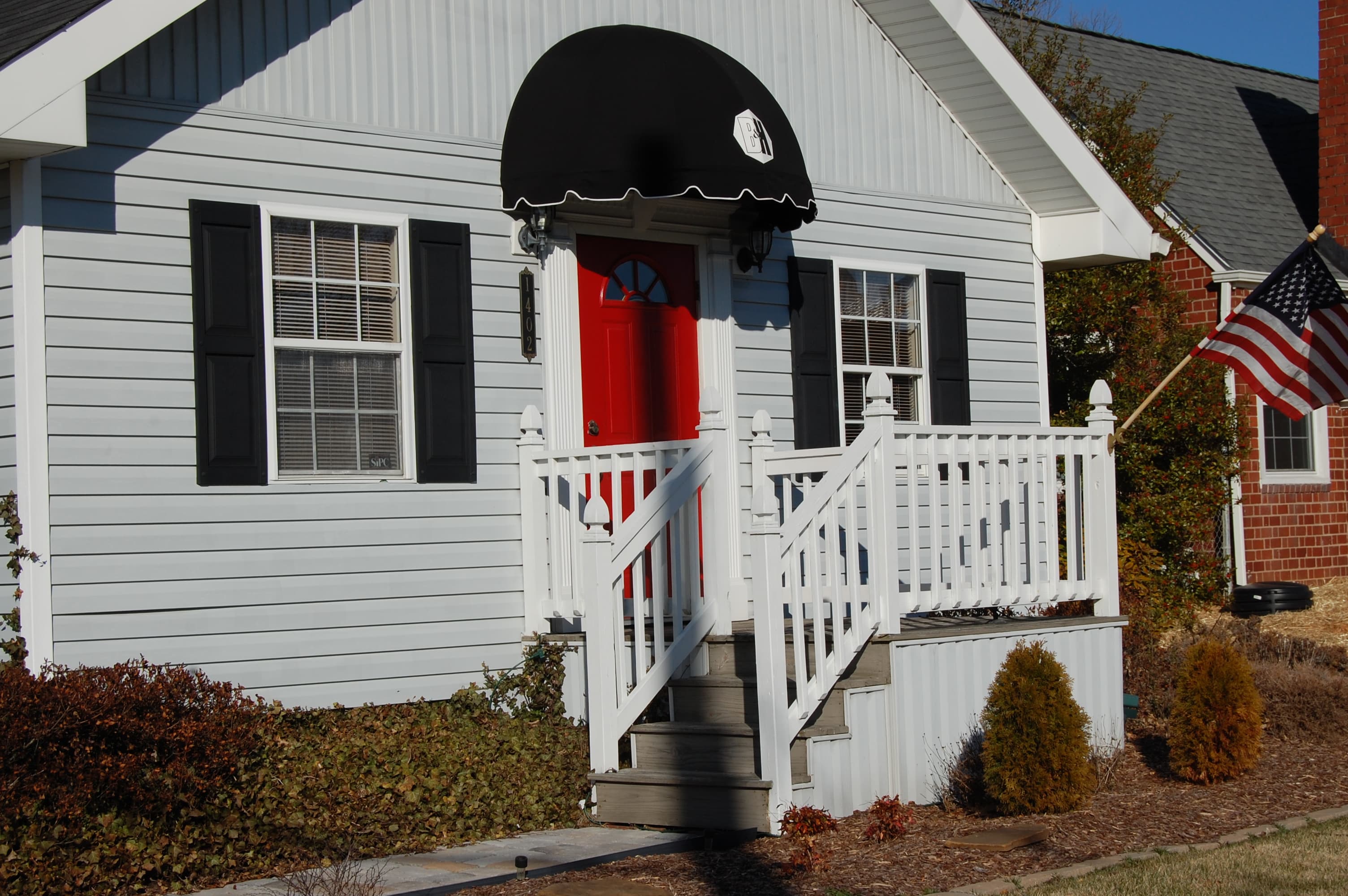
It used to be “call Bob.” For a long time now it has been “call Jeff.” Before long it will be “call Jake.” Same family. Same number. Three generations.
What we believe, quietly
You can learn most of what a firm believes by watching how it treats people when nothing is being sold.
Long before we read Isadore Sharp’s book on the Four Seasons hotels, we had a plainer word for what we were after: hospitality. Sharp’s argument is that culture is not one part of a business, it is the business. We were already trying to do that. He gave us the vocabulary for it.
It comes out in four commitments everyone here is held to, not rules so much as expressions of respect.
- Show up on time.
- Do what you say you’re going to do.
- Finish what you start.
- Say please and thank you.
Two more phrases hang on our walls. Every second counts, because a family’s time is the one asset we cannot replace or recover for them. Everything matters, because the small things are not small. A returned call, a prepared meeting, an honest answer. That is where trust gets built.
Faith runs underneath the way we work here. We would rather you feel it in how the phone gets answered than read a slogan about it.
How we got here
Sixty years, ring by ring.
A tree records its whole life in its rings, the good years and the drought years alike. So does a firm. Here are ours.
The 1930s
Before the corner
The family business did not start with financial advice. Bob’s father, Sam J. Bingham, ran a family furniture store, Bingham Furniture Co., in downtown Kingsport.
Different trade, same idea. You open the doors, you tell people the truth, and you are still there next year when they come back.
There is still a business here with this family’s name on it. That is the thing we are actually running, and everything else is a chapter of it.
1966
An audacious dream
Bob Bingham was thirty-four. Norman Hensley was thirty. In the middle of Holy Week they bought out the insurance side of the agency where they both worked and went out on their own. It was April 1. Nobody starts a firm on April Fools’ Day on purpose.
The Dow stood at 830 and a bear market was already underway. They began anyway, on an audacious dream, a great deal of courage, a healthy dose of naive optimism, and the total commitment of a family. Jeff was six.
Bob ran it with a yellow legal pad, a pen, and an HP 12c calculator, and came to computers late and reluctantly. None of that mattered, because what he actually had was the trust of the people across the table from him, and no tool has ever been invented that supplies that. We have Orion and Schwab and an options overlay now. Not one of them replaces what he had.
Neither has the rule underneath the whole firm changed. The first rule is never lose your money. The second is never forget the first. Conservative, here, is not caution for its own sake. It is the conviction that the money took you a lifetime to build and should not take one bad decision to lose.
People buy life insurance for two reasons: either they owe somebody, or they love somebody.
Bob Bingham 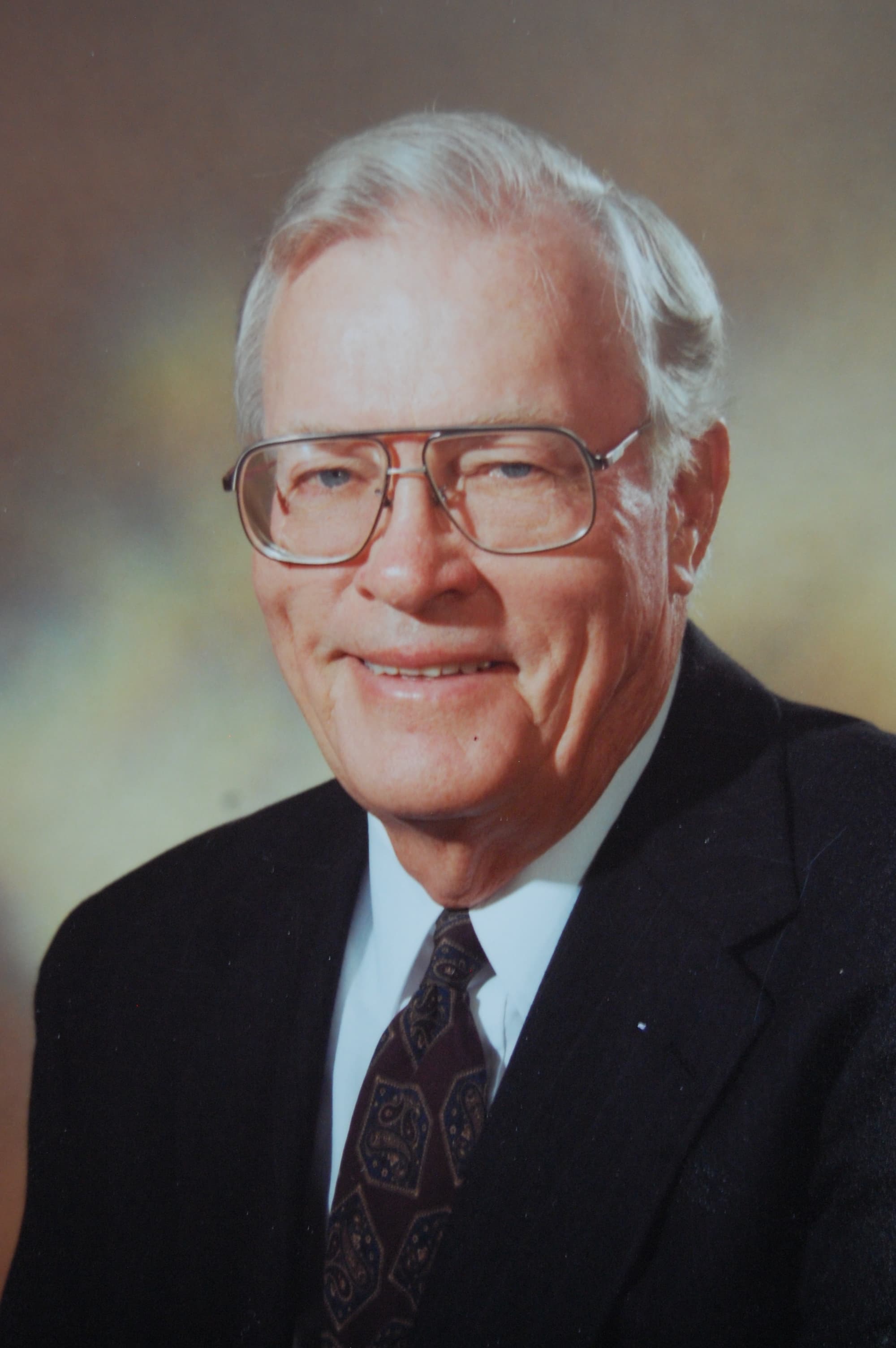
1975
The first test
Nine years in, Bob suffered a massive heart attack and spent more than a month in intensive care. Jeff was fifteen.
The firm survived on Norman, on the staff, and on the family closing ranks around it. A firm with no character does not survive losing one of its two founders for a month. This one did.
1986
The ground shifts
Both founders had earned their CFP designations and broadened the practice well beyond life insurance. For twenty years the firm had sold a great deal of real estate through limited partnerships, along with a sprinkling of mutual funds. Under the tax rates of the day they were genuinely useful, both as investments and as tax planning.
Then Wall Street overbuilt them for the tax benefit. A great many of those deals had no real estate underneath worth owning. The Tax Reform Act of 1986 removed the deductions in a single stroke, and the value went with them.
An investment has to stand on its own merits. If the reason to own it is the tax treatment, you do not own an investment. You own a tax code, and tax codes change.
That lesson was expensive and it is still in force here.
1989
The homecoming
Jeff came home with, in his words, hard knocks and lumps: mornings at the firm learning the business, nights in a restaurant earning a living, because Bob could not afford to pay him.
When Bob’s heart faltered again in September 1989, Jeff walked into Norman’s office and asked what he needed to do. He trained under Norman from there and was full-time by 1990. The second generation had begun.
I’m ready, coach. Put me in.
Jeff 1991
The first turn
Two years in, Jeff wrote his father a long memo arguing that the firm should become an investment firm, built on mutual funds and variable annuities rather than what it had been doing. He was twenty-six and he was not yet an equal.
His father read it and said yes.
It was the first of three times this firm has changed direction because the youngest person in it argued that it should.
The 1990s
The Eastman wave
Eastman spun off from Kodak in the early 1990s, and its point-based pension system began sending people into retirement at fifty, fifty-five, fifty-six with lump sums in hand. Money was, as Jeff put it, running out the doors. The 1990s became the firm’s largest growth decade.
The firm was pointed in the right direction when it happened. We would like to claim we saw it coming. We did not. We were ready, which is a different thing.
But the real work was a question. Bob and Norman would look at a fifty-three-year-old across the desk and ask: what are you going to do for the rest of your life? It puzzled the retirees. It also planted the philosophy that would eventually be named the Four Seasons, the idea that money is in service of a life and not the other way around.
If you spent a career at Eastman, or next door to someone who did, this is not a story we are telling you. It is one you already know.
1999
The second turn
The second memo argued that the firm should stop being paid by commission on mutual fund sales and move to fee-based advisory.
The writing was the easy part. The hard part was the unwinding, position by position, across share classes that all behaved differently, for every client the firm had. There was no template for it, so we wrote one.
We did it years before the industry was pushed in that direction. When we tell you our interests sit on your side of the table, that is not a compliance sentence. It is a decision that cost us real money in the year we made it.
2000–2002
The first crucible
The tech crash hit exactly the people most exposed to it: young retirees drawing down lump sums on fixed schedules. Some in town went broke and went back to work.
Ours held. Not because we saw the crash coming, but because the portfolios had been built for storms, to lose less on the way down. So a bad year never became a bad decade at anybody’s house. We took those calls one kitchen table at a time.
It was the first act of a lost decade; 2008 would bring the second, and the same discipline carried people through both. The philosophy this firm still runs on was not written in a calm room. It was forged in fire.
2005
The firm holds
Julianna was born, and in the same year Jennifer was diagnosed with stage-four cancer. The family’s world narrowed to the halls of Duke, from summer into October.
Jeff ran the practice remotely. Norman came back to work, and Bob worked too, so that, in Jeff’s words, his children could have a mother and not just a father. The firm held, because it was never only one person.
2010 & 2012
Losing the builders
Bob died in August 2010. Nearly every day to the end he told his son the same thing: I’m going to get better, and I’m going to come down there and help you. He left this world better than he found it, and that is still the standard this firm measures itself against.
Two years later, in December 2012, Norman died. He had given the firm forty-six years.
I lost my dad, I lost my best friend, and I lost my business partner.
Jeff 2014–2015
A new name, a new home
Bingham & Hensley became B&H Wealth Strategies in 2014. The next fall, on October 1, 2015, Jeff joined Silver Oak Securities after years of feeling like just a number at a larger firm. He has called it the best thing that ever happened in his practice.
October 1 was Bob’s birthday. Jeff has learned to pay attention to dates like that.
2021
The third turn
Jake is the reason we own Bitcoin, and that story is worth telling properly.
In late 2017, Jeff wrote a piece in My Views comparing Bitcoin to the Dutch tulip mania of the 1630s. Given what the asset was at the time, that was a reasonable conclusion and it was the serious view. When the facts changed, so did the firm, on the principle that when the facts change, that’s what you write about. If we are going to ask you to trust our judgment, you are entitled to know where it has been and how long it took us to move.
Jake had already reached a different conclusion, and he argued it for years while outranked. Between 2017 and 2021, three things matured. The asset itself, the younger man making the case, and the older one hearing it. By 2020 the argument had been joined by investors whose judgment Jeff respects, and the research on how a small allocation actually behaved in a portfolio did the rest.
The firm allocated on July 1, 2021, and has held it since.
A firm can be old, or it can be early. We have managed to be both.
Sixty years on the same corner is the first half of that sentence. An allocation held since 2021 is the second. Between the two of them sits the actual point, which is that the old and the new are both in the room here, and they argue, and sometimes the new one wins.
It took Jeff three years to arrive where his son already was. The next turn is already somebody’s job here, and he has been right before.
2022
The season that tested it
Jake joined the firm full time in the hardest season the family has ever known. His own decision, made in the middle of the storm and not in spite of it. The third generation began there.
2023
The turn
The firm that came through those years is the one you meet today. Same principles, deeper roots.
2026
Sixty years
The sixtieth anniversary celebration falls on September 24, 2026, which is also the birthday of Jeff’s brother John. That is not lost on anyone in the family.
Sixty years began with an audacious dream and the total commitment of a family, and the same things carry it forward.
The best is yet to come.
Jeff
At the end, no one reads a business card at the graveside.
They ask whether a man loved his family, whether he taught them what mattered, and whether it held. Our family is our resume. That is the measure for this family, for the families we serve, and for this firm.
The shelves
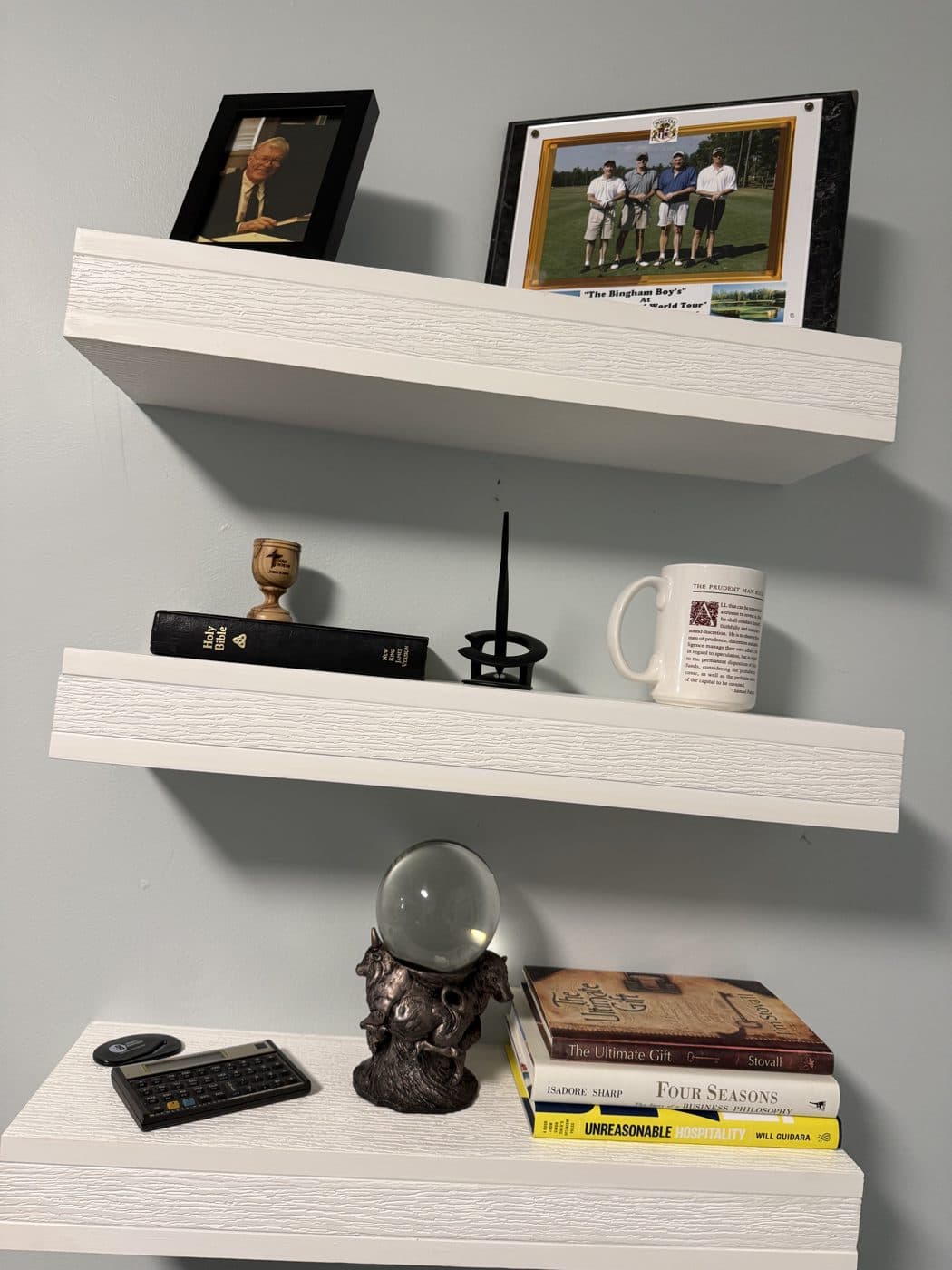
Every client meeting in this office happens in a conference room named for Bob Bingham.
In the corner, on the client’s side of the table, three shelves hold his picture, his HP 12c, and a crystal ball with a bull and a bear inside it. He kept the crystal ball on his desk for years and used it in meetings, and the joke was always the same.
“We keep a crystal ball on the shelf. It has never worked.”
He said it to make people laugh, and it worked. It is also the most accurate statement about market forecasting anyone in this building has ever made, and we have left it up there where clients can see it.
There's room for your family next.
We have met a lot of people at the start of this road, and walked most of them all the way down it. Wherever you are on yours, the next step is a conversation. Bring your questions, your statements, or nothing at all. There is no pitch. There’s coffee, and sixty years of having seen this before.